
Review
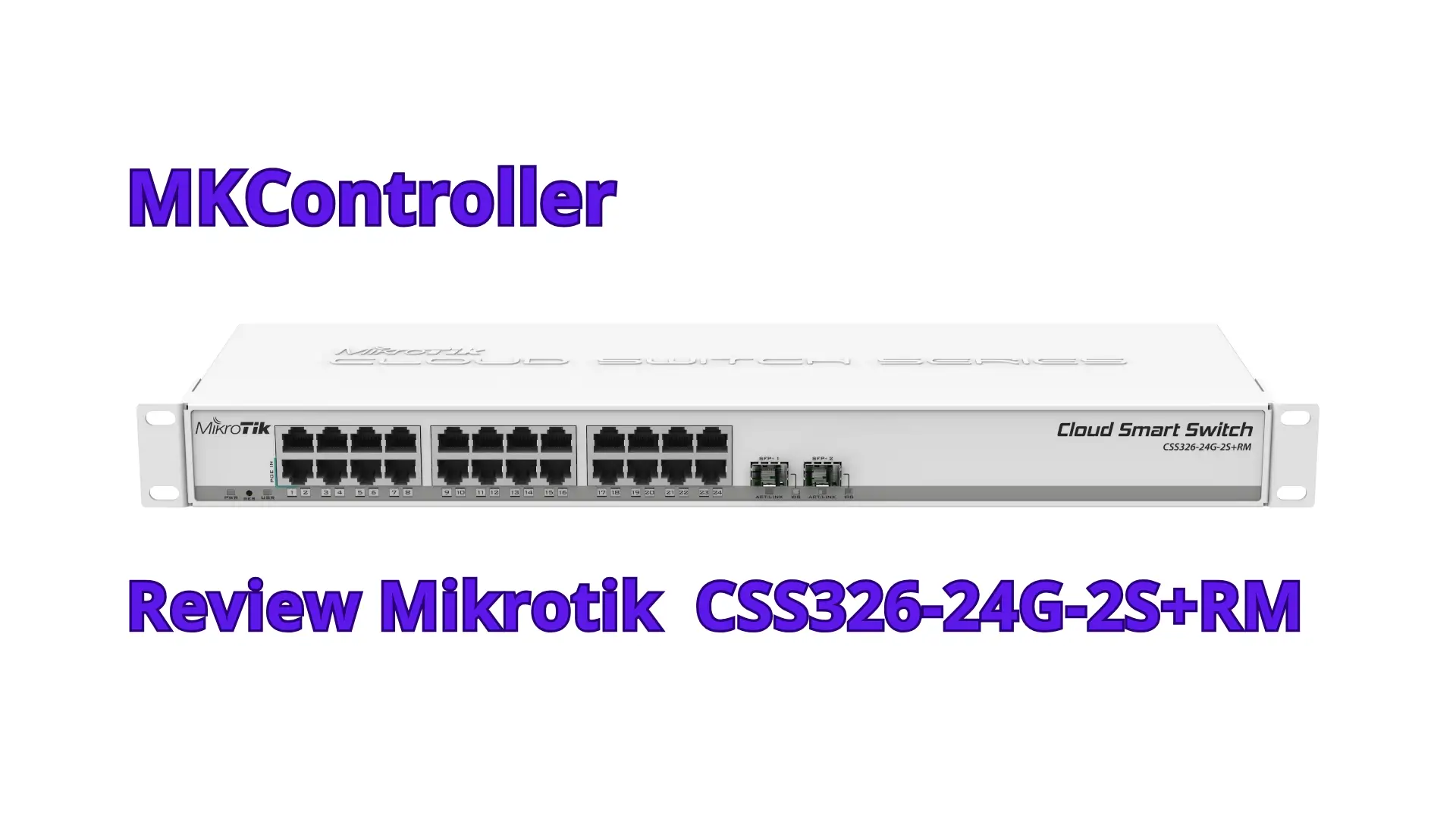
MikroTik CSS326-24G-2S+RM Review
Practical review of the MikroTik CSS326-24G-2S+RM — 24 Gigabit ports plus dual 10G SFP+ uplinks for ISP aggregation and SMB access layers.
Summary The MikroTik CSS326-24G-2S+RM is a 1U managed Layer-2 switch with 24 Gigabit Ethernet ports and two 10G SFP+ uplinks, running SwOS. It targets ISP aggregation, SMB access layers, and labs that need high port density plus 10G uplinks at a price point that undercuts enterprise managed switches. This review covers the hardware, what SwOS does well and where it stops, who should buy it, and where to step up to RouterOS-based switching instead.
What is the MikroTik CSS326-24G-2S+RM?
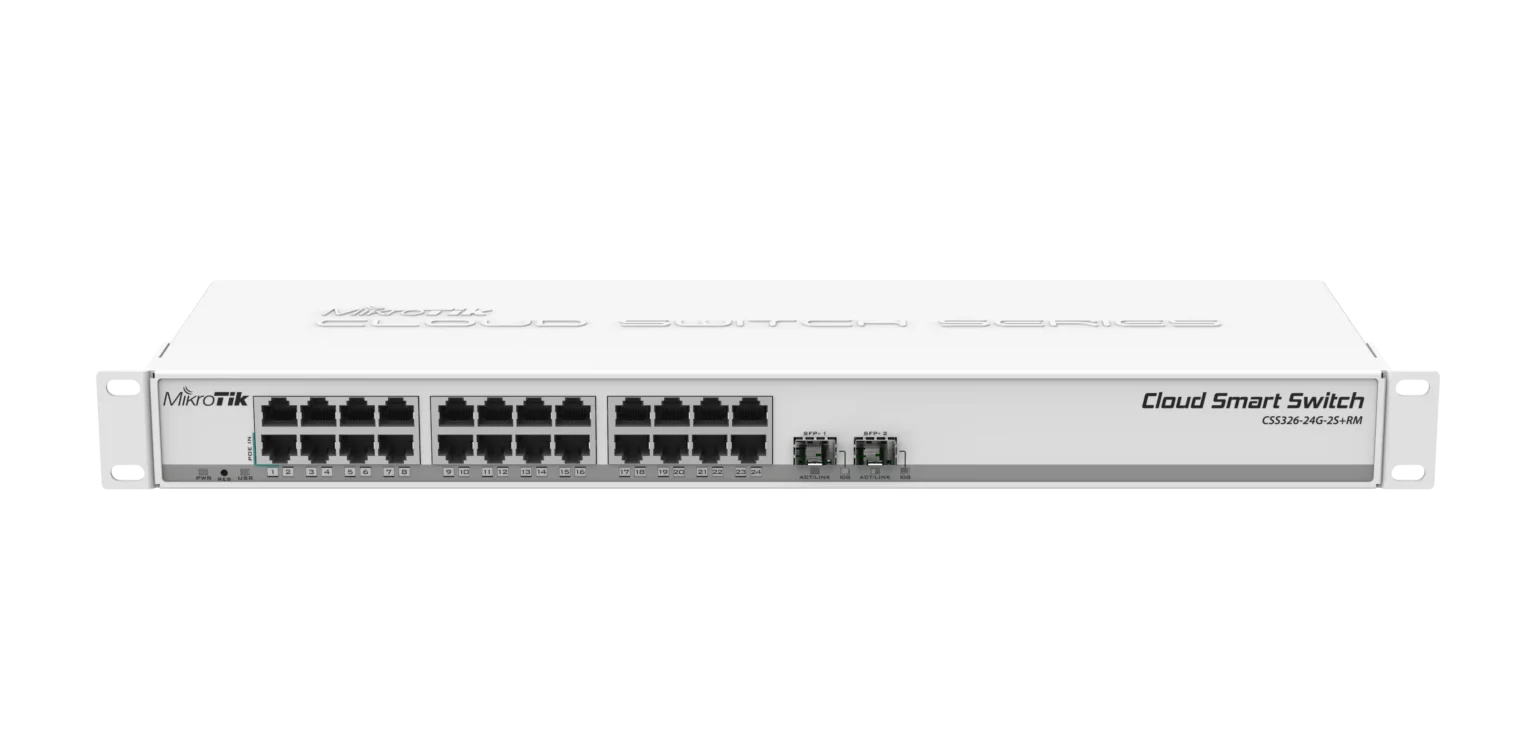
The MikroTik CSS326-24G-2S+RM is a 1U rackmount Layer-2 managed switch in MikroTik’s Cloud Smart Switch family. It pairs 24 Gigabit Ethernet ports for access-layer devices with two 10 Gbps SFP+ uplinks for servers, core links, or aggregation, and runs SwOS — MikroTik’s lightweight switch operating system with a straightforward web interface. The point is high port density and 10G uplinks at a price that makes it the obvious default at SMB access layers and small ISP aggregation tiers.
What you get is a focused Layer-2 traffic mover with VLAN segmentation, link aggregation, port monitoring, MAC filtering, and per-port bandwidth control. What you don’t get is RouterOS, advanced automation, or L3 features at the switch itself — those live on the router upstream. For a complementary RouterOS-based view, see our CSS610 review and the RB5009 routing tier review.
Main specifications
| Component | Specification |
|---|---|
| Ethernet ports | 24 × 10/100/1000 Mbps |
| SFP+ ports | 2 × 10 Gbps |
| Processor | Marvell 88E6193 |
| RAM | 256 KB |
| Operating system | SwOS |
| Switching capacity | 52 Gbps |
| Maximum forwarding rate | 77.4 Mpps |
| Maximum power draw | 19 W |
| Form factor | 1U rackmount |
With 52 Gbps switching capacity and a 77.4 Mpps forwarding rate, the CSS326 handles heavy traffic at the access layer without becoming a bottleneck. The 19 W power draw is genuinely low for a 24-port switch with 10G uplinks — relevant when power is metered or when cooling capacity is the constraint.
How SwOS simplifies management
Unlike the routing-oriented MikroTiks that run RouterOS, the CSS326 uses SwOS — purpose-built firmware for Layer-2 switches. The web interface is straightforward and configuration is quick even for administrators with limited deep-networking experience. The feature set covers:
- VLAN configuration for traffic segmentation and security boundaries.
- Detailed port monitoring and statistics for identifying bottlenecks or misbehaving devices.
- Per-port bandwidth control to limit individual devices or groups.
- Link aggregation (LACP) for combining multiple ports into a single logical link.
- MAC filtering and access control to restrict unauthorized devices.
All settings are accessible through a web GUI — no command-line configuration is required. The trade-off is that SwOS doesn’t expose programmatic APIs comparable to RouterOS, so cloud-first templated workflows have to operate at the router layer above the switch.
Advantages of the CSS326
The switch stands out in several areas, especially compared with similarly-positioned managed switches from larger vendors:
- High performance — 52 Gbps switching capacity prevents bottlenecks under heavy access-layer load.
- Excellent cost-benefit — MikroTik hardware undercuts enterprise brands meaningfully while keeping the feature set rich for the price tier.
- Easy expansion — SFP+ slots support 10 Gbps uplinks to servers or other switches, enabling growth without replacing the switch.
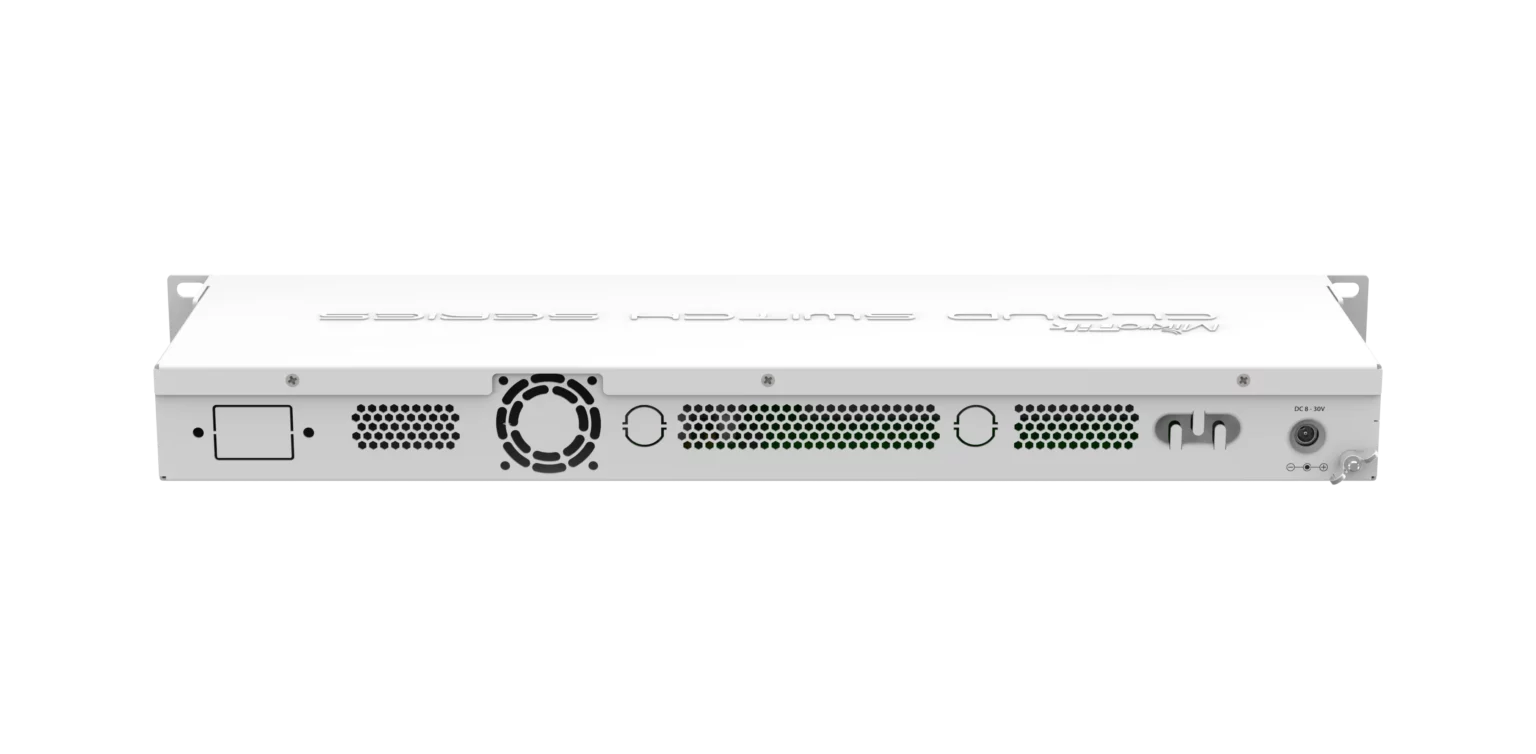
- Low power consumption — At 19 W maximum, suits energy-conscious deployments and crowded racks.
- Simplified configuration — SwOS’s web interface is accessible without deep networking experience.
Who should buy the CSS326?
The CSS326-24G-2S+RM is versatile across several professional scenarios:
- Internet Service Providers needing robust high-density switches for customer aggregation.
- Small and medium-sized businesses wanting VLAN segmentation and security without enterprise-equipment pricing.
- Corporate environments with high-performance servers and storage where 10 Gbps uplinks matter.
- Labs and network enthusiasts exploring link aggregation, MAC filtering, and advanced switching features.
For monitoring the switch and surrounding fleet via SNMP, see our SNMP monitoring guide and Zabbix integration tutorial.
Is it worth investing in?
If your network needs reliable affordable Layer-2 switching with high port density, the CSS326-24G-2S+RM is the natural choice. The combination of 24 Gigabit ports and dual 10 Gbps SFP+ uplinks gives flexibility today and headroom for future expansion, while the low operating cost and intuitive management interface make it attractive for organizations without dedicated networking teams.
Take the next step
The CSS326 keeps the access layer simple and fast. The real win in multi-site networks comes from pairing it with a predictable cloud control plane — MKController centralizes RouterOS monitoring and operations across the routing tier while letting switches like the CSS326 stay focused on what they do best: moving Layer-2 traffic at line rate.